
Stress testing navigation through recently visited folders in &file-pilot

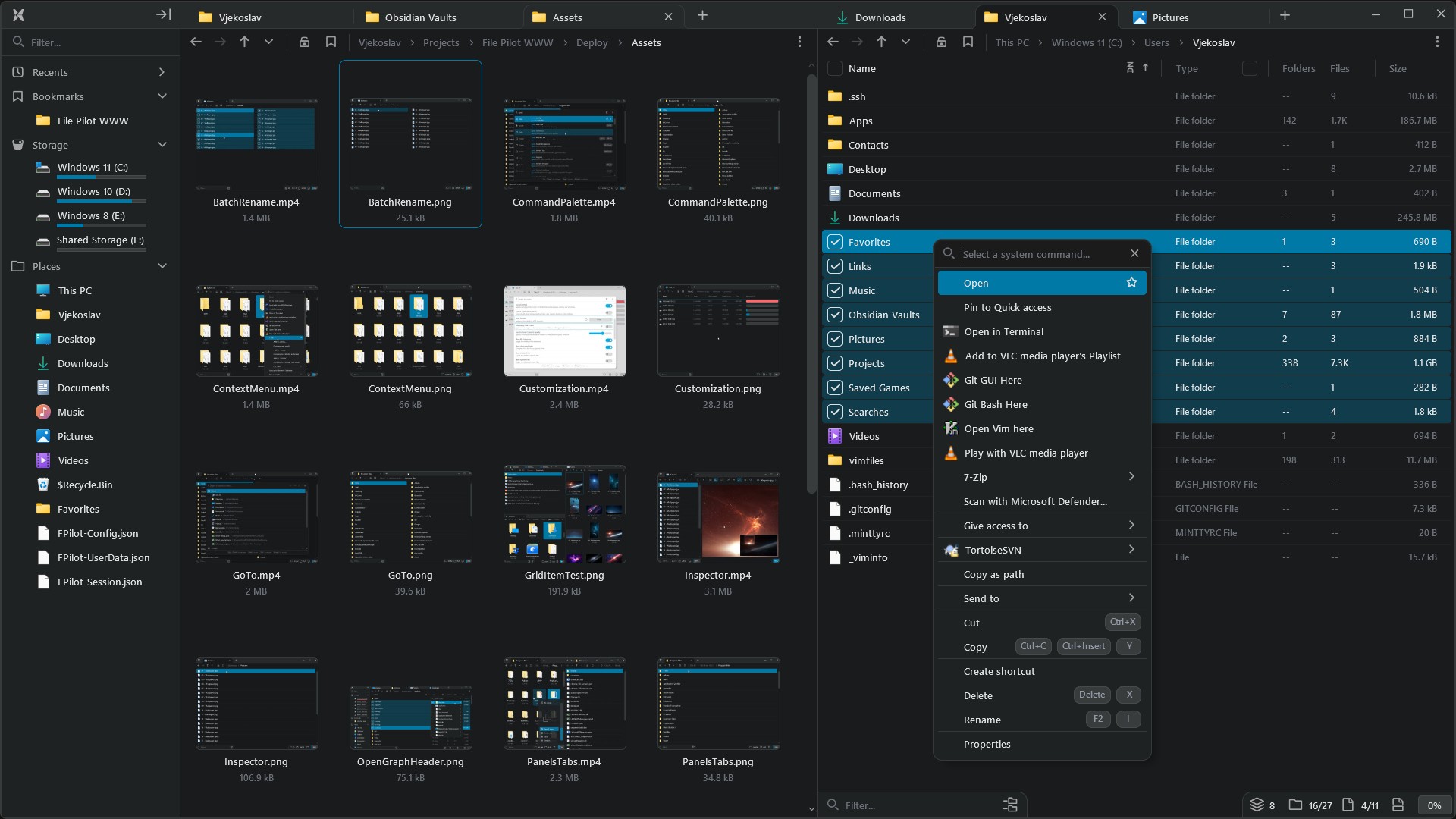
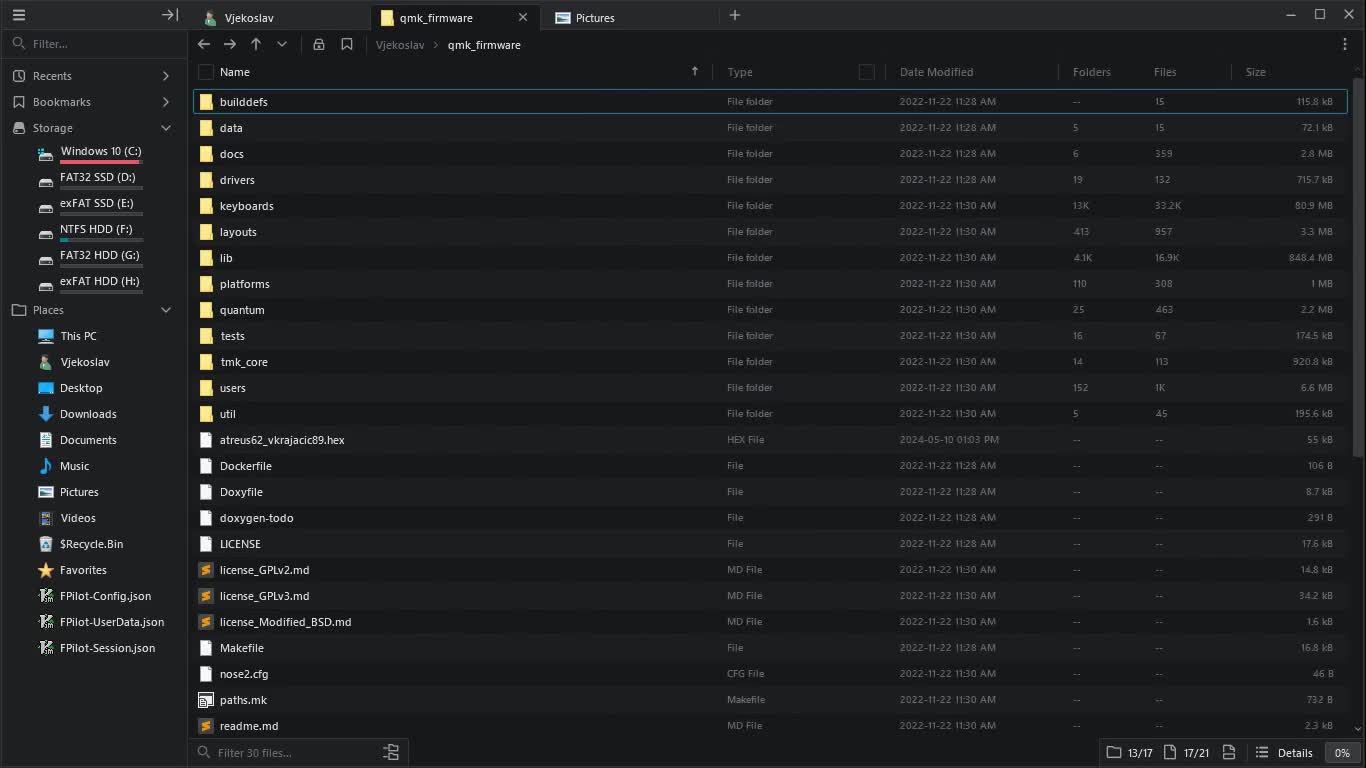
Fast isn't a feature. It's the baseline. From indexing and search to thumbnails, everything responds in a split second. There's no interface lag. Startup is immediate.
A clean, minimal and versatile interface built around your files. From panels and tabs to the inspector and command palette, every tool is accessible by mouse or keyboard.
Personalized with your colors, hotkeys, layouts and default actions. From fonts and spacing to animations, all grounded in a consistent design with strong defaults.
A single small executable. No background services, hidden processes or system clutter. The installer is optional and built into the same file.
Perpetual access means no subscriptions, no accounts, and no internet dependency. You're never locked out. It's always yours.
Full time development started in 2022. Originally codenamed Disk Voyager, it was written in C to stay as close to the OS and hardware as possible and to remain sustainable and stable in the long term. It also doesn't use external libraries, with a few small exceptions such as stb_sprintf.h.
This provides enormous flexibility and freedom when experimenting with new features, since everything can be tailored specifically to the needs of the program. It also often results in better performance and a smaller executable size due to less software bloat.
In that respect, a lot of the underlying technology has been developed alongside the program itself:
The current version targets 64-bit Windows 7 and above.
File Pilot was written entirely by hand for its first three years, before the first public release. As AI models became more capable, I started using them mainly for faster documentation and API exploration as well as checking my own newly written code for logical bugs. Generative AI is not used to write File Pilot's code.